Snowfall so far this winter is likely helping some Prairie farmers rest a little easier.
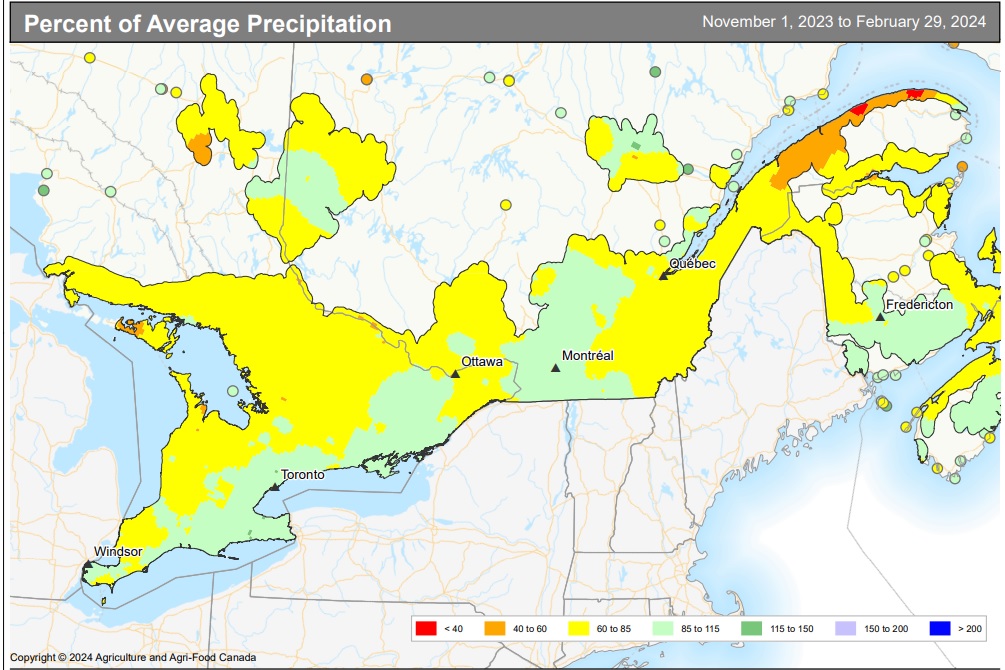
As can be seen on the map below, winter precipitation for the Nov. 1 – Jan. 1 period has been near to above normal for much of Alberta and Saskatchewan, with some areas being hit with especially heavier amounts – including the northern portions of both provinces. Areas east of Calgary have also fared well.
Although spring moisture conditions obviously remain uncertain, the heavy precipitation to begin the winter at least provides some hope of improvement for the 2026 cropping season. According to a CBC report on Friday, December precipitation for the city of Edmonton was more than 400% above the 30-year average. On the other hand, much of Manitoba and the far eastern parts of Saskatchewan have seen below normal precipitation so far this winter.
Despite record production for some crops last year, portions of Western Canada were still stubbornly short on soil moisture heading into winter, most notably the central and southwestern Prairie. That dryness was already raising concerns about soil moisture for spring planting.
Released last month, the Saskatchewan Water Security Agency’s Conditions at Freeze-up Report for 2025 said eastern areas of the grain belt generally entered freeze-up with adequate to surplus soil moisture, while much of western Saskatchewan and the far north remain notably dry. The report warned most of the province was at moderate to high risk of seeing negative impacts to surface and shallow groundwater supplies in 2026 because of drought.
“West central and east central Saskatchewan are at the highest risk,” the report said.
However, the jury remains out on just how much benefit the unusually snowy winter will provide. A rapid melt and still-frozen ground could see much of the moisture run off rather than be absorbed.
The latest monthly update of the Canadian drought monitor showed abnormal dryness or some form of drought impacting 71% of Prairie agricultural lands as of the end of November. That’s up slightly from 68% in October and 64% in September.
The December drought monitor update should be released in the coming days.